

The historic rivalry of English & Australia teams is shaped through unforgettable players. Within, enthusiasts share personal most cherished cricketers across men's Ashes series timeline.
The Pugnacious Bairstow
On the topic of a favourite player, the choice falls on the combative Jonny Bairstow. His career during Ashes contests aptly captures the highs and lows of an English player. It began in the 2013 series, when he sacrificed his attacking game to dig in with the experienced Ian Bell. That winter, he stepped up to replace wicketkeeper Matt Prior, confronting the fearsome pace of Mitchell Johnson despite no first-class cricket in three months.
He had an Ashes-winning comeback in the 2015 series and is the only English player with two Ashes hundreds on Australian soil after the year 2011, an achievement managed in spite of intense local press scrutiny. A difficult series followed during 2019, though it featured a crucial cameo in Headingley assisting the famous Ben Stokes and Jack Leach. After returning in the 2023 series, a magnificent 99 not out in Manchester would have been denied a series-turning result due to inclement rain.
Syd Barnes
No bowler command such reverence like the wonderful Syd Barnes. His performance taking 13 wickets in 80 overs during the 1901-02 Ashes Test stands as testament to his skill. It's fascinating to ponder what more he could have accomplished if he were a less difficult man to handle. With an incredible 6,229 wickets with a cost of 8.33 runs, many consider the greatest bowler ever. Studying his statistics in childhood proved utterly enthralling. What a magnificent rogue, truly incomparable. In the words of cricket administrator Billy Griffith: “What was remarkable about him was that everyone who played with him thought him the best there was. There was never any doubt in their minds.”
Richie Benaud
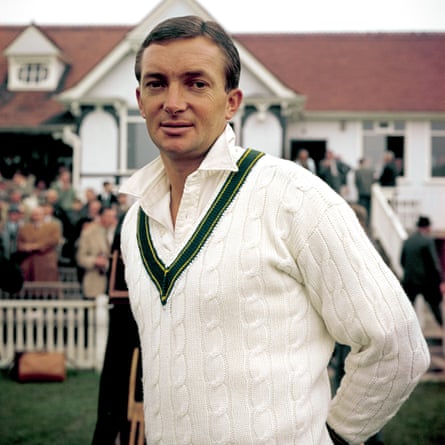
To countless fans, the ultimate player remains the legendary Richie Benaud. Starting high school during 1961 aligned with that year's Ashes, where the excitement was conjured by the glamorous Australian captain. Benaud didn't look from the rest; with flair combined with daring, a stark contrast from the more sedate approach. He was eloquent, charismatic captain who came with a reputation for playing attacking, exciting cricket.
Memories from that season, where a permanent passion with cricket was formed, focus on the final day of the fourth Test. Glued to the broadcast, the viewer saw England require 256 runs. A promising beginning saw Ted Dexter construct a widely acclaimed one of the great Ashes innings. Yet his dismissal for 76, taken by Wally Grout bowled by Benaud. Hope remained as captain Peter May coming at the crease. A delivery from Benaud and May steer the ball to leg. The next ball, he pitched outside leg, the ball spun viciously out of the footmarks and hit the stumps. The captain was out for a duck, the silence palpable. Benaud won the match with figures six for 70 and the visitors retained the Ashes. It was bittersweet emotion—desperate for an England win but in awe of an undeniable champion.
The Indefatigable Ian Botham
He is England's finest England cricketer. Relentless, inspirational, brilliant. For his heroics at Headingley in '81, Old Trafford 1981, the victorious 1986-87 Australian tour, not forgetting his famous retort directed at Merv Hughes. A hero not just for his charity work and his immense strength of character.
The Underrated Harry Boyle
History often overlooks figures like Harry Boyle, yet he deserves to rightfully be in any list of most important cricketers in Ashes history. Boyle served as Fred Spofforth's new-ball partner during the iconic 1882 match, and his contribution was as vital as his partner's in securing the win. In fact, it was Boyle who dismissed Edmund Peate to clinch the match. While Spofforth is celebrated as the father of pace bowling, his teammate was humble , self-effacing, consistently putting the team first. This modesty has led to his legacy being overshadowed, even though at his passing widely recognised as a pivotal personality in the sport's development.
The Incomparable Don Bradman
The choice has to be Sir Don Bradman. While leg-spinner Shane Warne stands as a giant, the sheer weight of runs Bradman accumulated against the old foe, combined with his tactical acumen, cements his status not just as a cricket legend but as the definitive answer. A batting average just shy of ninety, two scores over 300, and a brilliant double-hundred following an ingenious move to flip the batting order to protect his main batters from a damp wicket at the MCG in 1937.
Though not alive in his time, every enthusiast learns with his exploits from the 1930s and the 1948 tour. Whilst many recall the final duck that denied him a three-figure average, some treasure footage of him practising relentlessly using a water tank, and witnessing him withstand the brutal Bodyline series and still emerge with a 56 average during a notoriously difficult series for batsmen. He endures as the ultimate Ashes batter in many eyes.
Mike Brearley
He elevated the craft of leadership, so vital in cricket, to a new level. He defined an era showing that success against Australia, especially in Australia, required more than effort or brute force. He inspired with considered, intelligent leadership, creating an environment where his team's abilities thrived. His understanding of the game, the match state, and player psyches excelled precisely when a shift in momentum was required.
This was a beautifully subtle, nuanced approach {that challenged|contradict


